Pages

Saturday, April 3, 2010

The Farm


I once worked on a movie called The Farm. It starred Colin Farrell and Al Pacino. Fortunately its name was changed to The Recruit for release. I wouldn't have wanted that Hollywood formula flick to get confused with the excellent short The Farm. Fortunately for filmmaker Tom Henry, the fate that befell Cronenberg and his compellingly original and amazing movie Crash (thanks to Paul Haggis and his derivative and less than amazing movie Crash) will not repeat itself in this instance. Watch The Farm - I've heard Pacino makes an uncredited cameo appearance (he was being sheepish). Bleat.

Wednesday, January 27, 2010

Vargas Goes Mum


I’ll be back - just like Jane Froman in With a Song in My Heart (Walter Lang 1952) except that my legs are fine and I can’t sing and I’ve never entertained the troops (?)

We'll meet again, don't know where, don't know when - okay I do know where: right here but I really don't know when.

Sayonara (Joshua Logan 1957)
Farewell My Lovely (Dick Richards 1975)
Goodbye Mr Chips (Sam Wood 1939)
Bye Bye Birdie (George Sidney 1963)
The Long Goodbye (Robert Altman 1973)

See you in the movies!

Saturday, January 23, 2010

Preposition Cinema Part 5: Up, Down, Over and Out


Bringing up Baby (Howard Hawks 1938)
Downhill (Alfred Hitchcock 1927)
One Flew Over the Cuckoo’s Nest (Milos Forman 1975)
Out of the Past (Jacques Tourneur 1947)

Tuesday, January 19, 2010

Preposition Cinema Part 4: ON


Right On:
Miracle on 34th Street(Geroge Seaton 1947)
On the Waterfront (Elia Kazan 1954)
Strangers on a Train (Alfred Hitchcock 1951)
The Bridge on the River Kwai (David Lean 1957)
Knock on any Door (Nick Ray 1949)

Sunday, January 17, 2010

Preposition Cinema: Part 3: TO


Much To(o) Marvelous:
To Sir With Love (James Clavell 1967)
To Kill a Mockingbird (Richard Mulligan 1962)
Mr Smith Goes to Washington(Frank Capra 1939)
Mr Deeds Goes to Town (Frank Capra 1936)
To Have and Have Not (Howard Hawks 1944)
To Catch a Thief (Alfred Hitchcock 1955)
An Affair to Remember (Leo McCarey 1957)
To Each His Own (Mitchell Leisen 1946)
Witness to Murder (Roy Rowland 1954)
From Here to Eternity (Fred Zinnemann 1953)
Passage to Marseille (Michael Curtiz 1944)

Hope to Lamour to Crosby:
Road to Singapore (Victor Schertzinger 1940)
Road to Zanzibar (Victor Schertzinger 1941)
Road to Morocco(David Butler 1942)
Road to Utopia (Hal Walker 1946)
Road to Rio (Norman Z. McLeod 1947)
Road to Bali (Hal Walker 1952)
Road to Hong Kong (Norman Panama 1962)

Monday, January 11, 2010

Preposition Cinema Part 2: IN

In Like Flynn:
Death in Venice (Luchino Visconti 1971)
In the Mood for Love (Wong Kar-wai 2000)
Last Tango in Paris (Bernardo Bertolucci 1972)
A Place in the Sun (George Stevens 1951)
In Credible:
Love in the Afternoon (Billy Wilder 1957)
In a Lonely Place (Nicholas Ray 1950)
The Woman in the Window (Fritz Lang 1944)
An American in Paris (Vincent Minnelli 1951)
Stars in my Crown (Jacques Tourneur 1950)
Singing in the Rain (Stanley Donen and Gene Kelly 1952)
Christmas in July (Sturges 1940)
Trouble in Paradise (Ernst Lubitsch 1932)
Spring in a Small Town (Fei Mu 1948)

Tuesday, January 5, 2010

Preposition Cinema: Part 1: OF


Cream Of the Crop:
Children of Paradise (Marcel Carne 1945)
Lawrence of Arabia (David Lean 1962)
Wizard of Oz (Victor Fleming and King Vidor 1939)
The Grapes of Wrath (John Ford 1940)
Woman of the Year (George Stevens 1942)
Ball of Fire (Howard Hawks 1941)
Sweet Smell of Success (Alexander Mackendrick 1957)
Shadow of a Doubt (Alfred Hitchcock 1943)
The Night of the Hunter (Charles Laughton 1955)
Touch of Evil (Orson Welles 1958)
The Saga of Gosta Berling (Mauritz Stiller 1924)
The Talk of the Town (George Stevens 1942)
The Enigma of Kaspar Hauser (Werner Herzog 1974)
Out of the Past (Jacques Tourneur 1947)
The Treasure of the Sierra Madre (John Huston 1948)


Kind Of Fabulous:
The Pride of the Yankees (Sam Wood 1942)
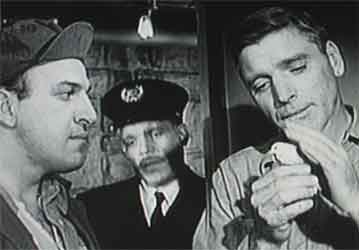
Birdman of Alcatraz (John Frankenheimer 1962)
Of Human Bondage (John Cromwell 1934)
In the Heat of the Night (Norman Jewison 1968)
Who’s Afraid of Virginia Woolf? (Mike Nichols 1966)
The Sound of Music (Robert Wise 1965)


Also Of Note:
The Docks of New York (Josef von Sternberg 1928)
Confessions of an Opium Eater (Albert Zugsmith 1962)
Force of Evil (Abraham Polonsky 1948)
Killer of Sheep (Charles Burnett 1977)
The Killing of a Chinese Bookie (John Cassavetes 1976)
Kiss of Death (Henry Hathaway 1947)
The Best Years of Our Lives (William Wyler 1945)
Anatomy of a Murder (Otto Preminger 1959)
Of Regret:
The Birth of a Nation (DW Griffith 1915)

Monday, October 19, 2009

I love old movies and I love this old earth. This is where those two loves intersect...

Smoking. They’re always doing it in the old flicks, lending mysterious atmosphere and romantic ambience to plot twists. Oblivious to the damage it would eventually wreak on lungs and environment, the stars of the golden age puffed away. Bette Davis, one of cinema’s most famous onscreen smokers, had to hide her character’s nicotine habit in 1942’s Now Voyager. But by movie’s end, Charlotte Vale (BD) has come a long way, baby, and that includes public smoking. Her lover (played by Paul Henreid) famously lights two cigarettes at the same time, one for himself, one for the lovely Charlotte.

But if they were polluting the air with tobacco smoke in the old days, at least they get points for how they lit their cigarettes: wooden matches and shiny lighters. Witness Kirk Douglas’s wiseacre newsman in Ace in the Hole (1951) as he holds his unlit match to a typewriter carriage then flips the return: zing and the carriage ignites his match. His fag is lit and everyone knows what a smartass the new reporter is.The cigarette lighters of yesteryear were souvenirs, collectibles, keepsakes. They had sentimental and/or monetary value. They were sometimes beautifully designed and often inscribed. James Stewart unwittingly “steals” one from the wedding loot in the wealthy household of Tracy Lord (Katherine Hepburn) in The Philadelphia Story (1940). The refillable lighter was a valued piece of property not to be discarded, unless of course, it was the only clue to identify one as a murderer, as in Hitchcock’s Strangers on a Train.

But rue the day lighters became disposable. Plastic lighters are part of the detritus that is turning our oceans into what Capt. Charles Moore has called “plastic soup”. Plastic is not biodegradable. And under 5% of all plastics get recycled. Under 5%! The rest ends up polluting the environment, most noticeably our oceans. Albatross chicks are dying at an alarming rate and dissections have shown bird stomachs full of bottle caps and other plastic items such as lighters. The Birdman of Alcatraz (1962) would have cried over the fate of these beautiful winged creatures.Plastic got a boost after the end of WW2 when Life magazine rejoiced with a cover story titled: Throwaway Living. But for a while glass remained the container of choice: milk still arrived at your door in glass containers. In 1955’s Rebel Without a Cause, James Dean stands exhausted by the refrigerator running a cold milk bottle over his forehead. And in Mr. Lucky, Cary Grant delivers big bottles of water for the office water cooler. No nasty plastic water bottles in sight, of course. Mildred Pierce (1945) has only real dishes in her restaurants including the porcelain coffee cups. And in countless domestic scenes groceries are brought home in paper bags, not indestructible plastic bags.


We had no idea what the full impact of Mr. Robinson’s one word of advice to Benjamin Braddock would be when in 1967’s The Graduate he uttered: “Plastics.” Objects made of plastic so thoughtlessly discarded are ruining our world. There are alternatives that we must embrace and soon. Remember that hot phone call between Donna Reed and James Stewart in It’s a Wonderful Life (1946)? So sizzling was it that you might have forgotten Sam Wainwright on the other end of the line extolling the future of “making plastics out of soybeans”. Sam was onto something. Hee Haw!


Planet in Focus International Environmental Film & Video Festival opens this week in Toronto. Oct. 21-25, 2009.

"Planet in Focus produces Canada’s largest and longest running environmental film & video festival. Its mandate is to produce an annual event that screens and promotes outstanding and compelling films and videos covering a broad range of environmental themes and issues by Canadian and International filmmakers. Our mission is to promote the use of environmental film and video as a catalyst for public awareness, discussion, and appropriate action on the environmental, ecological and social health of the planet."
www.planetinfocus.org

Monday, September 7, 2009

Ode to Technicolor


Laurence Olivier and a black fog descend on London. Traffic teams, neon signs glimmer and silhouettes deepen as all turns a darker shade of grey in the depths of night. Olivier is forced to hole up in a hotel due to the weather. Suddenly as he enters the lobby it’s like Dorothy opening the door onto Oz: brilliant colour, divine light, another world: not the land over the rainbow but a rainbow unto itself.

It was 1938 and rare for a comedy to get the Technicolor treatment, colour being reserved for musicals and period pieces, but Alexander Korda was producing The Divorce of Lady X and he was in love with his leading lady. The credits list a Technicolor Photographic Advisor and a Technicolor Colour Director. Korda also enlisted award-winning cinematographer Harry Stradling Sr. The Art Director’s credit reads: Settings Designed in Colour by Lazare Meerson. And it looks as if Mr. Meerson took his palette from the candy store, the soda fountain, the cake shop. Sherbet, parfait, ice cream, cotton candy, cake, icing, candy, candy and more candy.

All eye candy! Merle Oberon makes her entrance waving a two toned blue feather fan and wearing a white wedding cake of a gown adorned with lavender bows. She’s attending a costume ball at the hotel and now she can’t go home because of the fog. But all the rooms are booked so she has to talk Olivier, a complete stranger to her, into letting her stay in his lavish and colourful suite. There’s romance and mistaken identities brewing and, of course, antics ensue. (I believe the studios had special writers for the latter, their doors labeled AE Department). It’s a romp, a farce, a romantic comedy but mostly it’s a colour extravaganza. Peacock, lavender, lemon, gold, bubble gum, violet, plum, rose, mint, pistachio: The Divorce of Lady X is one huge crystal bowl of gay assorted bonbons. Vibrant pastels play off jewel tones as energetically as Olivier plays off Oberon.

Olivier’s character is a barrister and the day after he shares his suite (most chastely) with Oberon a new client shows up wanting a divorce because his wife has apparently spent the night in a hotel room with a man. Olivier believes this man’s wife is Merle Oberon and he goes into a spin in his elegantly appointed office: slate grey doors, ice blue walls, warm caramel-coloured leather chairs, buttery yellow picture frames.

Ralph Richardson portrays the allegedly cuckolded husband. While he downs glowing amber whiskey at the club surrounded by pale aqua walls and glittering chandeliers, Binnie Barnes, his supposedly cheating wife, sits at her vanity in a smoky grey-mauve dress. Her huge apartment foyer has mint green walls interrupted by robins’ egg blue doors and her boudoir sports a daffodil yellow fireplace, peach lampshades, cream quilts, champagne carpets and the palest banana chachkas: the perfect setting to have AE.

There’s great dialogue and wonderful acting but also scene after scene of endless hand wringing and mischievous doings and it would be tedious if not for the sheen and glow, the satin and froth. What the plot lacks Technicolor makes up for. Olivier’s hair is black as midnight against a wall mural of sunshine yellow and dusky blue. Here on a red velvet banquet he converses with Merle who wears an ink black dress that highlights her blush-pink heart-shaped face and creamy décolleté. Her lips are like cherry candy.

As the revelation is about to unfold that Merle is not married to Sir Ralph she nervously flits about the parlour in a gown that rivals the hearth fire: orange-gold accessorized with a wisp of a red gossamer scarf. The fire burns deep orange and glimmers like jewels while Merle’s jewels sparkle like emerald fire and compete with her eyes. Sapphire blue carpeting, pale green seltzer bottles, silver coffee pots, yellow lamp glow, apple green and peppermint tapestry – what more could you want on a foggy grey day?

(PS You’ll have to find the DVD or catch this gem on TCM as you won’t see the colours I’ve described here in the youtube upload).

Saturday, May 9, 2009

Burt's Revivalist Do


The best thing about Elmer Gantry is Burt Lancaster's hair. His unruly locks vie for attention with his pearly whites but the coif wins hands down every time. This is Lancaster’s hobo hair. His hard drinking, whoring, boxcar-riding hair. But when he hooks up with the Bible thumpers his hair gets religion and calms down and sometime after that I lose interest. Okay, it’s not just the loss of his erratic mop that causes me to yawn. To be precise I go AWOL when Elmer first kisses Sister Sharon.

I blame Jean Simmons. Too pure and sweet for the part of Sister Sharon Falconer, Simmons simpers her way through the movie while Burt blazes. Shara (as Elmer calls her) needed some edge and Jean just didn’t have it. She was a well trained thespian, perfect as Ophelia opposite Olivier's Hamlet, sublime playing Ruth Gordon in The Actress and spot on as the helpless waif in So Long at the Fair. But I am always perplexed that she was cast twice opposite Marlon Brando while so many other actresses of the era would've been much better suited to play alongside the brooding star.

In Desiree she plays the title character to Brando's Napoleon and in Guys and Dolls she trills alongside his Sky Masterson. In the latter she is once again cast as a religious prude, and prude she could do; it was her melting-of-the-prude-in-the-arms-of-the-brute that I never found convincing. I couldn't understand the casting behind Gantry until I discovered that the director, Richard Brooks, was married to her at the time.

So who could have put some bite into this itinerant girl evangelist? The character was modeled after Aimee Semple MacPherson, the Canadian born traveling preacher whose mission it became to spread the Gospel worldwide in the 20s and 30s. McPherson famously disappeared for 35 days in 1920 and when she finally emerged (after having been presumed dead) she claimed to have been kidnapped. But all signs indicated that Aimee had been holed up with a married man in various hotels around the country. A song popularized by Pete Seeger at the time went: “The dents in the mattress fit Aimee’s caboose” and in 1976 a movie was made about that time in her life. Titled The Disappearance of Aimee it starred Faye Dunaway. Now that's good casting.

But who could have matched Burt’s passion and hair back in the late 50s when Lewis’ novel was being adapted for the screen? Katherine Hepburn would have been a good choice but Kate and Burt had already starred together in similar roles in The Rainmaker (1956) where he plays a fast talking con man (black cowboy hat covering hair) to Kate's shy virgin spinster.

I think Barbara Stanwyck would have been perfect for the lady preacher. And so did Frank Capra when, in 1931, he cast her to play a McPherson-inspired character in his movie The Miracle Woman.

So how about Susan Hayward? By 1960 Hayward had portrayed a number of hardcore characters – fiery, bad, rotten even – but always vulnerable. Smash-up: The Story of a Woman brought her the first of five Academy Award nominations. And when she gave real-life convicted murderer Barbara Gordon a heart in I Want to Live! she won the Academy Award for Best Actress. She’d have matched Burt’s fire just fine. And she had great hair.

It took me a few attempts before I finally watched Elmer Gantry all the way through. Rewrites and Hayward would have helped make it a better flick. Still, Burt is a joy to watch. He won an Academy Award for playing the Midwestern preacher/huckster in this sprawling wreck of a movie. He deserved it and so did his hair.